How to Become the Person You Want to Be, One Regular Day at a Time

A small daily practice for how to become the person you want to be, one regular day at a time.
Key takeaways
- ✦Becoming a new version of yourself works better as small repeated actions than as one big overhaul.
- ✦The gap between knowing what to do and doing it is not a character flaw.
- ✦A single daily sentence describing one believable action can build real evidence of change over time.
- ✦Missing a day of practice does not undo previous progress. The practice is designed so you can return to it.
- ✦Picturing one regular scene builds new habits better than picturing a whole new life.
You have tried to become a different person before. You read the book, made the list, and set the alarm early, meaning every word of it. Then an ordinary Tuesday arrived, and the new version of you went quiet again.
You are probably searching for how to become the person you want to be. You have likely already ruled out the obvious answer. The problem was never that you lack discipline, or that you do not want it badly enough.
How to Become the Person You Want to Be (Without Overhauling Your Whole Life)
Most women blame their own willpower when a fresh start falls apart. The real answer is more useful than that. Asking yourself to become a whole new person overnight asks too much of any body.
Your mind can decide to change in a single moment. Your body needs proof before it believes the change is safe. It collects that proof slowly, one repeated choice at a time.
The honest route to how to become the person you want to be is not a bigger plan. It is a smaller one, repeated on a regular day, until it stops feeling like effort and starts feeling like you.
Think about the skills you already changed without a dramatic reinvention. You once could not ride a bike, use a new phone without help, or send a hard email without rehearsing it a dozen times. Now you do all three without thinking, because your body caught up through repetition.
Consider the woman who wanted to save money every month. She did not need a fifty-page budget spreadsheet. She needed one standing order, set up once, that moved ten pounds before she could spend it elsewhere.
That is the whole method, in one sentence. Choose one believable action the person you want to be already does. Do that one thing today, in your actual day, not in some imagined future version of it.
Matching the step to what your body can accept today does not lower your ambition. It makes sure the step gets taken instead of postponed again. Keep the big picture in view if it helps, but do not ask tomorrow morning to carry the whole of it.
Free quiz
What's Your DAR Archetype?
Take the free quiz to find which archetype is leading in you right now - and get your reflection guide built for your stage.
Take the free quizWhy Knowing What to Do Was Never the Problem
You already know you need to set the boundary or start the savings account. You have known for years. Knowing was never the missing piece.
The gap sits between knowing and doing, and it says nothing about your character.
Something in you decides before your thinking mind gets a vote. It is your body choosing what feels safe, based on evidence it gathered a long time ago.
Say you know the pay rise conversation is reasonable. Your mind has the script ready. Your body still tightens the moment you picture saying it aloud, so the message stays unsent for another month.
Or say you know that eating lunch away from your desk would help you think more clearly. Your mind has made the case a hundred times. Your body stays seated anyway, because standing up and stepping away still feels like too much effort right now.
Nothing is wrong with you for feeling that pull. It is your body doing its job with old information, not responding to any real danger in front of you.
Closing that gap starts with giving your body small, repeated evidence that the new way is safe too. Most advice skips that evidence building. It talks about goals and motivation, and says almost nothing about the body that has to carry them out.
Picture the Woman You Are Becoming, in One Ordinary Scene
Stop picturing a whole new life. A whole new life is too vague for your body to recognise, so it does nothing useful with the picture.
Picture one scene instead.
The person you want to be answers the message she has been avoiding. She closes her laptop at a sensible hour. She says the sentence she usually swallows.
These are not grand achievements. They are regular Tuesday moments, the kind that repeat hundreds of times across a year. That is why they matter more than any single milestone.
Maybe your detail is the form that has been sitting on the side for three weeks. Maybe it is the reply you keep leaving until later. Pick the detail that is true for you, even if it sounds unremarkable to someone else.
Or picture her finishing the course module instead of reopening another browser tab. The detail should be ordinary enough that you could do it this week, in the life you are living right now.
Hold that one scene in your mind for a moment before you read on. That scene is the direction, and the next practice is how you move toward it without waiting to feel ready first.
A scene is easier for your body to believe than a label. 'Confident woman' means nothing concrete. 'Sends the reply before coffee is finished' is something your body can rehearse.
A Simple Daily Practice You Can Actually Keep
This practice takes under two minutes and needs nothing but a pen.
- Each morning, finish one sentence: 'Today, the person I'm becoming would ___.' Fill the blank with something true and doable before lunch.
- Do that one thing today, in the order your day actually runs, not in a perfect imagined version of it.
- At the end of the day, write one line about what happened. No scoring, no grading, only what you noticed.
- Tomorrow, write a new sentence, or keep the same one if it still feels unfinished.
Try it like this. One morning your sentence might be: 'Today, the person I'm becoming would reply to the message she's been avoiding.' You write it before your coffee is finished, and notice it took under two minutes, not the hour you had built it up to be.
This works because it gives your body small proof, every day, that the new version of you is possible. One sentence is specific enough to act on and small enough to actually finish.
Keep the sentence somewhere you will see it again that evening, a notes app or the back of an envelope. The point is not the format. The point is that it exists in writing, not only in your head.
If mornings are not when your mind works best, move the sentence to whatever part of the day you actually trust. The order matters less than doing it at a time you will keep.
The Mistake That Undoes This Practice
The most common mistake is writing a sentence too large to finish in a day. 'The person I'm becoming starts my own business' cannot be completed by bedtime, so it becomes another failure added to the pile.
The fix is almost embarrassingly small. Make the sentence smaller than feels impressive, until it is something you could finish on the busiest day you have had this month.
The second mistake is waiting until you feel ready before you write the sentence at all. Feeling ready is not a prerequisite here. It usually arrives after the action, not before it.
The third mistake is skipping one day and deciding the whole practice has failed. One missed day is not evidence of anything. It is a missed day, and tomorrow is still available to you.
Imagine writing 'become unrecognisable this year' as the sentence, month after month. It has no Tuesday in it, nothing you could actually do before lunch, so it never gets ticked off.
A practice you can return to after missing a day will outlast one that demands a perfect streak. Build for the version of you who sometimes forgets, because that version is real too.
What Gets in the Way, and Why It Is Not a Character Flaw
Some days the sentence sits unfinished, and the old pull to postpone it feels stronger than expected. That pull is not proof you do not want this badly enough.
Change, even change you asked for, can make your body cautious. The unfamiliar can register as risk long before your mind has worked out there is nothing dangerous happening.
A tight chest before a hard phone call is not weakness. It is old wiring responding to an old pattern, not to what is happening right now.
This can show up as sudden tiredness right before the action. It might be a reason the timing is not quite right, or a familiar voice telling you to wait for a better week. None of that means you have gone backwards.
When you notice the pull, that noticing is the useful part. It is a cue to choose, consciously, who you want in charge of what happens next. That is different from information to file away and worry about later.
Choosing to become someone new can stir up more than a to-do list. Old grief or old anger can surface alongside the hope, and that is a normal part of this kind of work.
DAR is a self-help programme, not a therapy service. If you are working with a clinical diagnosis or are in active crisis, please speak with a qualified healthcare professional.
Free quiz
What's Your DAR Archetype?
Take the free quiz to find which archetype is leading in you right now - and get your reflection guide built for your stage.
Take the free quizA Question Worth Asking Before Bed
Before you sleep, ask yourself one question. What did the person I am becoming do today, even in a small way?
You are not looking for a dramatic answer. A short, plain answer counts. I sent the message, or I said no once.
If the honest answer is nothing at all, ask a second question instead. What is one thing I would do tomorrow morning, before anything else gets in the way?
Write the answer somewhere you will see it again, rather than trusting yourself to remember it later. A note on your phone works as well as a page in a notebook.
If you already keep a journal, this question can sit at the bottom of that habit, with no new system to maintain.
Over a few weeks, these answers become a record you can read back. That record is the proof your body was waiting for, built one regular day at a time.
Some evenings the record may feel thin, and that is fine. A thin week is still a record, and it still counts toward the larger pattern you are building.
Frequently asked questions
- How long does it take to become the person you want to be?
- There is no fixed timeline, because it depends on how small and repeatable your daily action is. Most women notice a shift in how a situation feels within a few weeks of daily practice. The change keeps building for as long as you keep going.
- What if I miss several days in a row?
- Missing days does not undo the practice or send you back to the start. Pick the next regular day and write one sentence again, without adding a penalty on top. The practice is designed to be returned to, not completed in one unbroken streak.
- Do I need a big goal before I start?
- A long-term goal can sit in the background, but it does not need to be finished or even fully clear before you begin. Start with one scene and one sentence, and let the bigger picture fill in as you go.
- Why does this feel harder on some days than others?
- If a day feels harder, especially during change that matters to you, the practice has not stopped working. Make the sentence smaller today.
- Does this replace having a bigger vision for my life?
- No. The bigger vision still matters, and it gives the daily sentence its direction. This practice is how you walk toward that vision instead of only thinking about it.
You might also enjoy
What Do I Want in Life
Why Do I Feel Stuck in Life? The Real Reason (and the 20-Minute Fix)
Wondering why do I feel stuck in life? It's often a missing direction, not a motivation problem. Grab the free template to name yours.
What Do I Want in Life
How to Figure Out What You Want in Life (When You Only Have a Vague Idea)
One sentence, built the right way, can turn a vague want into a clear direction. Here's how to figure out what you want in life.
What Do I Want in Life
Feeling Stuck In Life? What It Actually Means, Plus a 24-Hour Fix
Feeling stuck in life usually means your direction is unclear, not that you lack motivation. Try the free 24-Hour Direction Test.
About the author
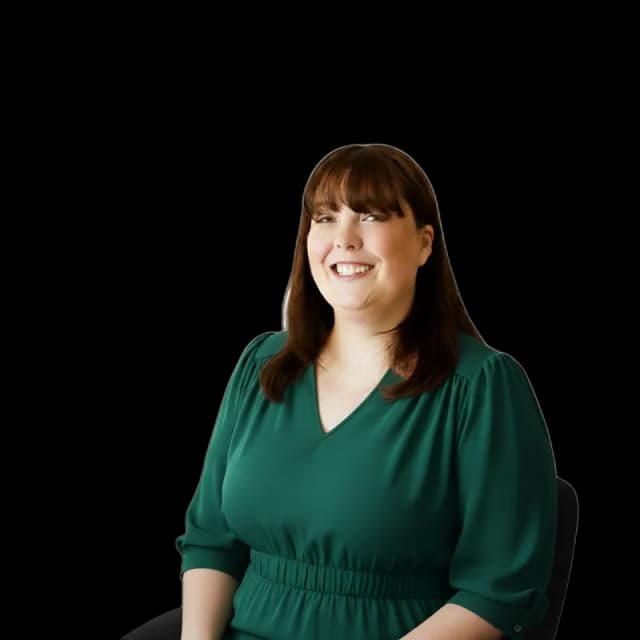
Lesley Christie
An NLP Master Practitioner and CBT Coach Practitioner, Lesley spent decades reading personal development and New Thought books. She understood the methods, and still couldn't make them stick. The missing piece was her body, quietly protecting her from the dream she wanted. Dream.Align.Rewire is what she built from that.